Table of Contents
Related Blogs


How to Get Rid of Ants in the House Quickly
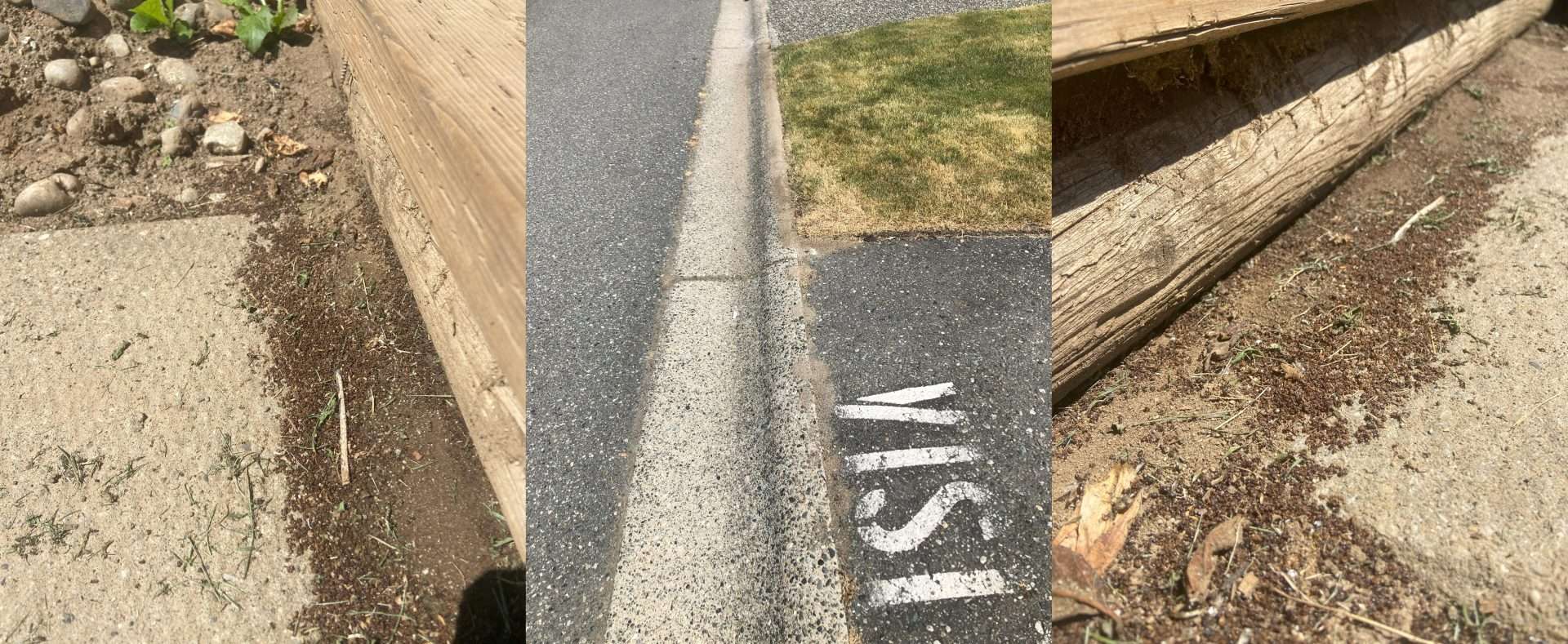
Ants in the kitchen, bathroom, pantry, or basement usually mean one thing: a scout found food, water, or shelter, then brought the rest of the crew with it to settle in.
The fastest fix is not just spraying the ants that you can see. That may kill a few workers, but it usually misses the colony. Instead, start by cleaning the trail, removing the source, and using bait where ants are already active.
In this guide, we’ll cover how to get rid of ants in the house quickly, what to do first when you see an active trail, why ants keep coming back, and when to call a professional pest control company.
How to Get Rid of Ants Fast: The Short Answer
To get rid of ants in your house quickly, wipe the ant trail with soapy water or vinegar and water, remove food and water sources, place ant bait along active trails, and avoid spraying near the bait. Visible ants can be killed immediately with soapy water, but bait is usually better for eliminating the colony.
Do this first:
- Clean the ant trail.
- Remove crumbs, spills, grease, pet food, and standing water.
- Place ant bait where ants are travelling.
- Do not spray insecticide around the bait.
- Seal entry points once the activity slows.
If ants keep coming back, you may have a hidden nest, carpenter ants, moisture issues, or an outdoor colony close to the house. These situations are harder to solve with DIY methods, may indicate a more serious problem, and are usually worth having inspected.
How to Get Rid of Ants in the House Quickly: 5 Steps
Step 1: Follow The Trail- Find What the Ants Are After
Before cleaning or treating anything, take a minute to follow the trail.
The trail can tell you two important things: where the ants are getting in and why they decided to stay. One end often points toward the entry point, like a window, door, baseboard gap, or pipe opening. The other end usually leads to the reward: food, moisture, garbage, pet bowls, or something sticky.
You may not find both ends perfectly if the trail is weak, but even a rough idea of where they lead may eventually help you find where the ants got in and what is attracting them. If you only wipe up the ants without knowing what they found, they will likely just rebuild the trail again.
Check the usual trouble spots:
- Under the toaster, stove, fridge, and dishwasher
- Around garbage, recycling, and compost
- Near pet food and water bowls
- Inside pantry shelves
- Around sticky jars, bottles, and containers
- Under sinks
- Along windowsills, doors, and baseboards
Ants do not need much. A few crumbs, a drop of syrup, a greasy spot, or a bit of moisture can be enough to keep them coming back.
Step 2: Clean the Trail
Once you know where the ants are moving, clean the trail with warm water and dish soap. A vinegar-and-water solution can also help disrupt the scent trail ants use to guide each other.
Wipe the full route if you can, not just the spot where you saw the most ants. That may include the counter, floor, baseboard, cabinet edge, window frame, or area behind an appliance.
This step is not just about making the surface look clean; it removes the invisible trail that tells other ants where to go.
Step 3: Remove the Food or Water Source
Now, deal with whatever brought the ants in.
Once you know what they are heading toward, remove as much of the attraction as you can. That might mean sealing open pantry food, wiping down sticky jars and bottles, sweeping under the fridge or stove, emptying garbage and compost, or picking up pet food that has been sitting out. If the ants are showing up near a sink, bathroom, laundry room, or basement, check for moisture too. Even a small drip under a cabinet can keep them interested.
If ants are showing up in the bathroom, laundry room, or basement, moisture may be the bigger issue. In that case, look for condensation, damp wood, plumbing leaks, or standing water.
The goal is to make the trip no longer worth it for them. If the ants keep finding food or water, they will keep trying to return.
Step 4: Place Ant Bait Where They Are Already Travelling
Ant bait is usually more useful than spray because it gives the ants a chance to carry the treatment back to the colony. This is important because the ants on your counter are only the workers. If you only kill the ones that come out, the nest will keep sending more.
Place bait close to the trail, but not directly in the middle of where you need to clean, cook, or walk. Baseboards, under sinks, behind appliances, near entry points, and quiet corners along the trail are usually better spots.
After placing bait, give it time to work. You may actually see more ants gathering around the bait at first. That is frustrating, but it can also mean they have found it and are feeding on it, which is the point. The goal is not just to stop today’s trail; it is to get the bait carried back to the source of the problem.
Avoid spraying insecticide around bait. If the ants are repelled or killed too quickly, they may never bring the bait back to the nest.
Step 5: Seal Entry Points After Activity Slows
Once the trail has slowed down, start closing off the easy access points.
Look for gaps around:
- Exterior doors
- Windows
- Baseboards
- Pipes
- Utility lines
- Foundation cracks
- Vents
- Damaged weather stripping
For small cracks and gaps, caulking is usually the simplest fix. If ants are slipping in around doors or windows, check the weather stripping and replace any sections that are loose, cracked, or no longer sealing properly. For exterior doors, a damaged or missing door sweep can leave just enough space for ants to keep finding their way in.
Sealing is important, but it works best after baiting and cleaning. If ants are still active indoors, sealing one opening too early may simply push them to another route.
What Not to Do When You Have Ants
A few common fixes can make the problem harder to solve.
- Do not only kill the ants you see. The visible ants are just the workers. The colony may still be active.
- Do not spray over bait. Spray can interfere with bait and stop ants from carrying it back.
- Do not move bait too quickly. Give it time to work before deciding it failed.
- Do not ignore moisture. Damp areas can keep ant problems going, especially around sinks, bathrooms, basements, and damaged wood.
- Do not assume every ant problem is harmless. Carpenter ants are different from small kitchen ants. They have the potential to cause structural damage to your home, and should be taken more seriously.

Why Do Ants Suddenly Appear in the House?
Ants can seem to appear overnight because of how quickly they communicate. A scout ant finds food, water, or shelter, then leaves a pheromone trail for other ants to follow.
Common reasons ants suddenly show up include:
- Warm weather
- Heavy rain
- Dry weather
- Crumbs or spills
- Pet food left out
- Open pantry items
- Leaky pipes or damp areas
- Gaps around doors, windows, or the foundation
In the Fraser Valley, ant activity often picks up when the weather changes. Rain can push ants out of outdoor nesting areas, while dry weather can send them looking for water indoors.
What Type of Ants Are in Your House?
You do not need to identify the exact ant species before doing the basic steps above. Cleaning, removing food, baiting, and sealing are still the right starting point.
That said, identification matters if the ants keep coming back.
If you see large ants indoors, sawdust-like debris, activity near damp wood, or ants coming from walls or ceilings, it is worth getting the problem inspected.
When DIY Ant Control Is Usually Enough
DIY ant control may be enough when the problem is small and limited to one area.
You may be able to handle it yourself if:
- You are seeing one small trail.
- You can find the food or moisture source.
- The ants are not large carpenter ants.
- Activity slows after cleaning and baiting.
- The problem does not keep returning.
For a few ants around the sink or pantry, the steps above are a reasonable first move.
When to Call a Professional Exterminator
Call a pest control professional when ants keep returning, spread to multiple rooms, appear inside walls, or may be carpenter ants.
It is also time to get help if:
- You cannot find where the ants are coming from.
- Baiting has not worked.
- The infestation is getting worse.
- You see large black or dark brown ants indoors.
- You find sawdust-like material near wood.
- Ants are showing up around electrical outlets.
- You want treatment handled carefully around children, pets, or sensitive areas.
Professional ant control is not just about using stronger products. A proper inspection can identify the species, find likely nesting areas, locate entry points, and treat the problem in a more targeted way.

How to Keep Ants From Coming Back
Once the ants are gone, prevention is mostly about making your home less inviting.
In the kitchen, that usually means staying on top of the small stuff ants are very good at finding: crumbs under the toaster, sticky rings on syrup bottles, pet food left out overnight, compost that sits a little too long, or a bit of grease near the stove. Pantry food should be sealed well, especially sugar, cereal, flour, snacks, and anything sweet.
Moisture control matters too. A small drip under the sink, damp wood, condensation around a window, or a wet cabinet can keep ants interested even when the kitchen is clean.
Outside, look at the areas where ants can move easily toward the house. Trim shrubs and branches back where you can, avoid piling mulch or soil directly against the foundation, and check for small gaps around doors, windows, pipes, vents, and utility lines.
You probably cannot make a home completely ant-proof, especially during peak ant season. But you can make it much harder for one scout ant to find a reason to bring the rest of the colony inside.
Ant Control in the Fraser Valley
The Bugman Pest Control helps homeowners across Abbotsford, Mission, Chilliwack, Langley, Aldergrove, Maple Ridge, Surrey, Vancouver, Burnaby, Richmond, Delta, White Rock, Coquitlam, and surrounding areas deal with ant problems that do not resolve with DIY methods.
If you are seeing a few ants near the sink, start with the steps in this guide. If the ants keep coming back, spread to new rooms, or look like carpenter ants, it is time to get the problem checked.

How to Get Rid of Ants in Your House
What gets rid of ants immediately?
Soapy water or a contact spray can kill visible ants immediately. However, this only handles the ants you can see. For better long-term results, clean the trail and place ant bait where ants are active so workers can carry it back to the colony.
How do I get rid of ants permanently in my house?
To get rid of ants long-term, remove food and water sources, clean pheromone trails, use bait to target the colony, seal entry points, and fix moisture issues. If ants keep returning, there may be a hidden nest indoors, under a slab, or outside near the foundation.
What smell will keep ants away?
Ants may avoid strong smells such as vinegar, peppermint, citrus, cinnamon, and eucalyptus. These smells can help disrupt trails temporarily, but they do not eliminate a colony. Use them as a short-term deterrent, not the main treatment.
Why do I suddenly have ants?
You suddenly have ants because scout ants likely found food, water, or shelter inside your home. Once they find something useful, they leave a scent trail for other ants to follow. Weather changes, crumbs, pet food, leaks, and gaps around doors or windows can all trigger ant activity.
What is the fastest way to get rid of ants in the house?
The fastest way to get rid of ants in the house is to clean the active trail, remove the food or water source, and place ant bait along the route the ants are already using. Soapy water can kill visible ants right away, but bait is better for reaching the colony.
Why do ants keep coming back even after I clean?
Ants keep coming back because the colony is still active, the scent trail was not fully removed, or there is still a hidden attractant nearby. Check under appliances, inside cabinets, around garbage, near pet food, and under sinks. If the problem continues, the nest may be hidden.
Does vinegar get rid of ants?
Vinegar can help disrupt ant scent trails and make surfaces less attractive for a short time. It may kill some ants on contact, but it is not a reliable colony treatment. For active ant problems, vinegar works best as a cleaning step before baiting.
How do I stop ants from coming into my house?
Stop ants from coming in by sealing gaps around doors, windows, pipes, vents, and foundation cracks. Keep food sealed, clean spills quickly, reduce moisture, trim vegetation away from the home, and use bait when ants are actively trailing.