Bees are essential to life on Earth. They pollinate crops, flowers, and trees, keeping ecosystems and food supplies thriving. But when bees make themselves at home in your walls, deck, or lawn, the situation shifts from admiration to alarm.
The truth is, bees don’t belong indoors or in high-traffic areas around your home. Knowing what type of bee you’re dealing with and how to safely encourage them to move along is the key to solving the problem without harming these valuable pollinators.
This guide covers the most common types of bees you’ll encounter, why they’re drawn to your home, and practical ways to handle them safely.
Why Are Bees Attracted to Your Home?
Bees aren’t random squatters. They’re drawn to properties that check off their survival needs:
- Food Sources: Sweet smells from fruit, flowers, sugary drinks, or even uncovered trash can lure them in.
- Shelter: Quiet cavities like attics, sheds, or wall voids make excellent hive spots away from predators.
- Wood: Carpenter bees prefer untreated or weathered lumber for burrowing.
- Dry Soil: Ground bees thrive in sandy, bare earth with little vegetation.
- Nesting Material: Cracks, gaps, and crevices in structures provide the perfect foundation for colony building.

Understanding what brings them in helps you take steps to make your home less appealing.
Common Types of Bees in and Around Homes
Before you can act, you need to know who you’re dealing with. Different bees behave differently—and require different approaches.
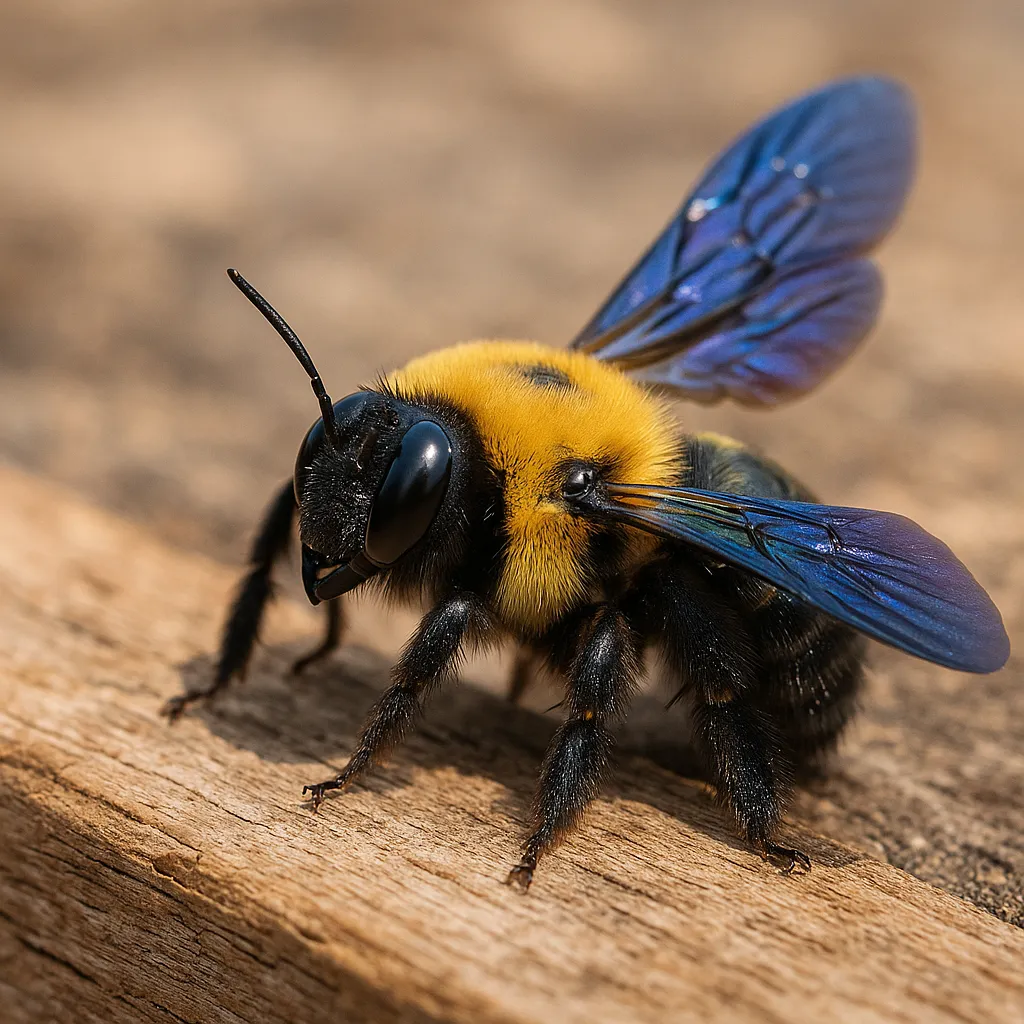
1. Carpenter Bees
- How to Spot Them: Large, solitary bees with shiny black abdomens. They hover around decks, fences, siding, and pergolas.
- Habits: Drill perfect round holes in untreated wood to lay eggs, often reusing and expanding tunnels year after year.
- Why They’re a Problem: Their tunneling weakens structures over time, invites mold/moisture issues, and attracts woodpeckers that feed on their larvae.

2. Ground Bees
- How to Spot Them: Small bees that burrow into the soil, often leaving little mounds or holes across lawns and garden beds.
- Habits: Solitary nesters that prefer sunny, dry areas with little ground cover.
- Why They’re a Problem: They’re usually harmless but can multiply quickly across bare patches of lawn, creating clusters of burrows that make outdoor spaces unpleasant.
3. Honeybees (Hives in Structures)
- How to Spot Them: Heavy bee traffic near a single opening—like roof eaves, siding gaps, vents, or chimneys. A faint buzzing or honey smell indoors can also be a clue.
- Habits: Form large colonies that produce wax and honey, which they store inside cavities.
- Why They’re a Problem: Hives in walls cause structural damage, leak honey, attract ants or rodents, and become harder to remove as they grow.

Safe (and Humane) Ways to Remove Bees
Now that you know which type of bee you’re facing, let’s look at safe, eco-friendly methods for handling them.
Removing Carpenter Bees
- Hang carpenter bee traps near affected areas.
- Paint, stain, or varnish exposed wood to make it less attractive.
- At night, when bees are inactive, fill their tunnels with steel wool and seal with wood putty or caulk.
- Replace or repair damaged boards to eliminate re-entry points.
- For large infestations, call a professional to safely relocate them.
Pro Tip: Painted or treated wood is the carpenter bee’s least favorite. Keeping surfaces maintained is the best prevention.
Removing Ground Bees
- Thoroughly soak the soil—ground bees dislike damp environments.
- Cover burrow entrances with mulch, landscaping fabric, heavy soil, or even stone pavers.
- Reseed or re-sod bare lawn patches to eliminate nesting areas.
- Water and fertilize regularly to maintain thicker turf that discourages burrowing.
- If ground bees cluster too close to walkways or play areas, consider professional relocation.
Pro Tip: A lush, healthy lawn is your best long-term defense against ground bees.
Removing Honeybees from Walls or Structures
- Do not attempt DIY removal inside walls—it’s dangerous and messy.
- Call a pest professional or local beekeeper who specializes in live removal.
- After extraction, ensure the wall cavity is thoroughly cleaned and sealed—honey residue left behind attracts ants, rodents, and future bee colonies.
- Repair entry points like cracks, vents, or siding gaps to prevent reinfestation.
- For large or established hives, request relocation rather than extermination.
Pro Tip: Many local pest control companies partner with beekeepers to ensure honeybee colonies are moved safely instead of destroyed.
The Dangers of Leaving Bees Untouched
Bees may seem harmless if you do not disturb them, but leaving them alone inside your home or too close to living spaces can create bigger problems over time.
- Structural Damage: Carpenter bees drill into wood, weakening beams, decks, and siding. Honeybees in walls can cause sagging drywall from the weight of wax and honey.
- Secondary Pests: Abandoned honey inside walls attracts ants, moths, and even rodents looking for a food source.
- Allergies and Stings: While most bees are not aggressive, a disturbed hive or accidental encounter can trigger defensive swarming. This is especially dangerous for anyone with bee allergies.
- Escalating Infestations: What starts with a few bees can quickly turn into a thriving colony that is much harder and more expensive to remove later.

In short, ignoring the problem rarely makes it go away. It usually allows the colony to grow and the damage to increase.
Why You Should Call a Professional
DIY methods are fine for small, simple cases, but professional help is the safest route when bees settle deep into structures or form large colonies. Here is why experts make a difference:

- Safe Removal Techniques
Professionals use specialized tools like hive vacuums, protective gear, and containment systems to extract bees without risking injury. - Humane Relocation
Many pest control companies work with local beekeepers to relocate colonies so bees can continue pollinating in a safer environment. - Preventing Recurrence
After removal, pros seal entry points and clean up residue such as wax and honey that would otherwise attract future infestations. - Peace of Mind
Instead of worrying about whether your DIY attempt worked, a licensed team ensures the bees are gone and your property is secure.
Hiring a professional is not just about removing the immediate issue—it is about solving the problem completely and protecting your home long term.
Frequently Asked Questions
Can bees be removed without killing them?
Yes. Many professionals specialize in live relocation. Even some DIY remedies, like citrus sprays or essential oils, encourage bees to leave naturally without harm.
What natural scents repel bees?
Bees dislike peppermint, eucalyptus, citronella, and citrus. Spraying these oils mixed with water around nesting areas can help deter them.
Can I remove a hive inside my walls myself?
No. Hives inside structures are complex and messy. Attempting DIY removal can damage your property and provoke aggressive bees. Always call a professional for this type of job.
Why should I avoid killing bees?
Bees are essential pollinators for crops, flowers, and ecosystems. Killing them harms the environment and should only be a last resort. Relocation is always better.
How do I prevent bees from coming back?
Seal cracks or gaps in your home, keep wood treated or painted, maintain a healthy lawn, and store sweet-smelling foods and drinks properly. Prevention is your strongest long-term tool.
Final Thoughts and Call to Action
Bees play an irreplaceable role in our environment, but when they move into your home or yard, they quickly shift from helpful pollinators to a serious problem. The key is to act quickly, choose humane solutions, and know when it is time to bring in the experts.
If you are dealing with bees on your property, do not wait for the problem to grow. Contact The Bugman Pest Control at 604-854-2847 for safe, effective, and eco-friendly bee removal services. Our team can handle everything from carpenter bees to honeybee hives inside walls, giving you peace of mind and a bee-free home.
Sources
- https://www.fs.usda.gov/wildflowers/pollinators/animals/bees.shtml – U.S. Forest Service guide explaining the role of bees as pollinators and their importance in ecosystems.
- https://www.epa.gov/pollinator-protection – EPA resources on protecting pollinators, including safe pesticide practices and habitat preservation.
- https://agr.georgia.gov/honey-bee-control-and-removal – Georgia Department of Agriculture’s recommendations for safe honey bee removal and control.
- https://legacy.winnipeg.ca/publicworks/insectcontrol/insect/bees.stm – City of Winnipeg information on bee identification and safe handling of infestations.
- https://extension.msstate.edu/publications/prevention-and-treatment-nuisance-honey-bees-around-your-home – Mississippi State University Extension guide on preventing and managing nuisance honey bees near homes.