Have you recently spotted tiny brown insects scurrying across your kitchen floor or bathroom counter? If they look like smaller versions of cockroaches, you’re probably seeing baby roaches (also called cockroach nymphs). Finding these little ones in your home is more than just scary – it usually means there’s a bigger problem hiding in your walls.
Why Finding Baby Roaches is Important
When you see baby cockroaches, it means adult roaches have already made themselves comfortable in your home and started a family. Baby roaches don’t travel far from their nest, so seeing even one or two means there’s likely a nest nearby. And since cockroaches are really good at hiding and usually come out at night, the ones you see are just a small part of the actual problem. According to the EPA, cockroaches prefer sites close to moisture and food, making them common pests in kitchens, bathrooms and food storage areas.
What Baby Roaches Look Like
Baby cockroaches might be small, but they’re easy to spot once you know what to look for. They’re usually about the size of a grain of rice and light brown in color. Unlike adult cockroaches, baby roaches don’t have wings, and they tend to move quickly along walls or in dark corners. You’ll most often find them in warm, damp places like under your sink or behind your fridge.
If your looking for further clarification, check out this post on reddit.

Where These Tiny Roaches Come From
In the Fraser Valley, we mostly deal with two types of cockroaches that can infest homes. German cockroaches are the most common – they’re smaller and light brown with two dark stripes on their backs. American cockroaches are bigger and reddish-brown. Both types love warm, humid places and are always looking for food and water.
Why You’re Seeing Baby Roaches Now
There are several common reasons why you might start seeing baby cockroaches:
Your home provides everything roaches need to thrive. They’ve found water from leaky pipes or humid areas around leaky windows, food from crumbs or unsealed containers, and cozy hiding spots in cluttered areas or cardboard boxes.
If you live in an apartment or connected building, baby cockroaches might have come from a neighbouring unit. They can easily travel through walls and floors, looking for new places to live.
Diy Options To Keep You Pest-Free
The key to eliminating a cockroach infestation is to begin by removing any potential food sources, and then working on eliminating the existing population of roaches. Our favourite recommendation for diy solutions is sticky traps combined with gel baits. The gel baits work to kill the baby cockroaches by poisoning them and their co-inhabitants. Sticky traps are used to physically trap and eliminate the roaches, and serve as a great way to monitor the population.
Gel Baits
Our preferred active ingredient for roach bait is Dinotefuran, but in Canada this product requires a pesticide license. If your looking for a consumer friendly product, try mixing Boric Acid to make a paste like gel. The key to a successful homemade bait is palatability. Too much boric acid becomes bitter and repels cockroaches, while too little is ineffective.
Ingredients (by volume):
- 1 part boric acid powder
- 2 parts flour (e.g., all‑purpose, rice, or white flour)
- Optionally: 1 part powdered sugar (for sweetness) or a bit of cocoa powder for added lure.

Instructions:
- In a bowl (wear gloves and optionally a dust mask), mix all dry ingredients.
- Gradually add just enough water or milk to form a play‑dough consistency—not wet.
- Roll into small pea‑sized balls or flatten into dime‑sized discs.
- Place them on wax paper or inside bottle caps near roach activity sites.
Sticky Traps
Sticky traps work to monitor and reduce your pest population. They work for the following reasons:
- Behavior-based capture: Roaches like to travel along walls and edges at night. Sticky traps placed in these “runways” catch them as they move.
- Scent lure: Many commercial traps contain a food-based attractant that draws roaches in.
- Population tracking: The number and size (baby vs adult) of roaches caught helps you gauge the severity of the infestation and locate hotspots.
- Break the cycle: While not as powerful as baits, they do remove some breeding adults from the population.
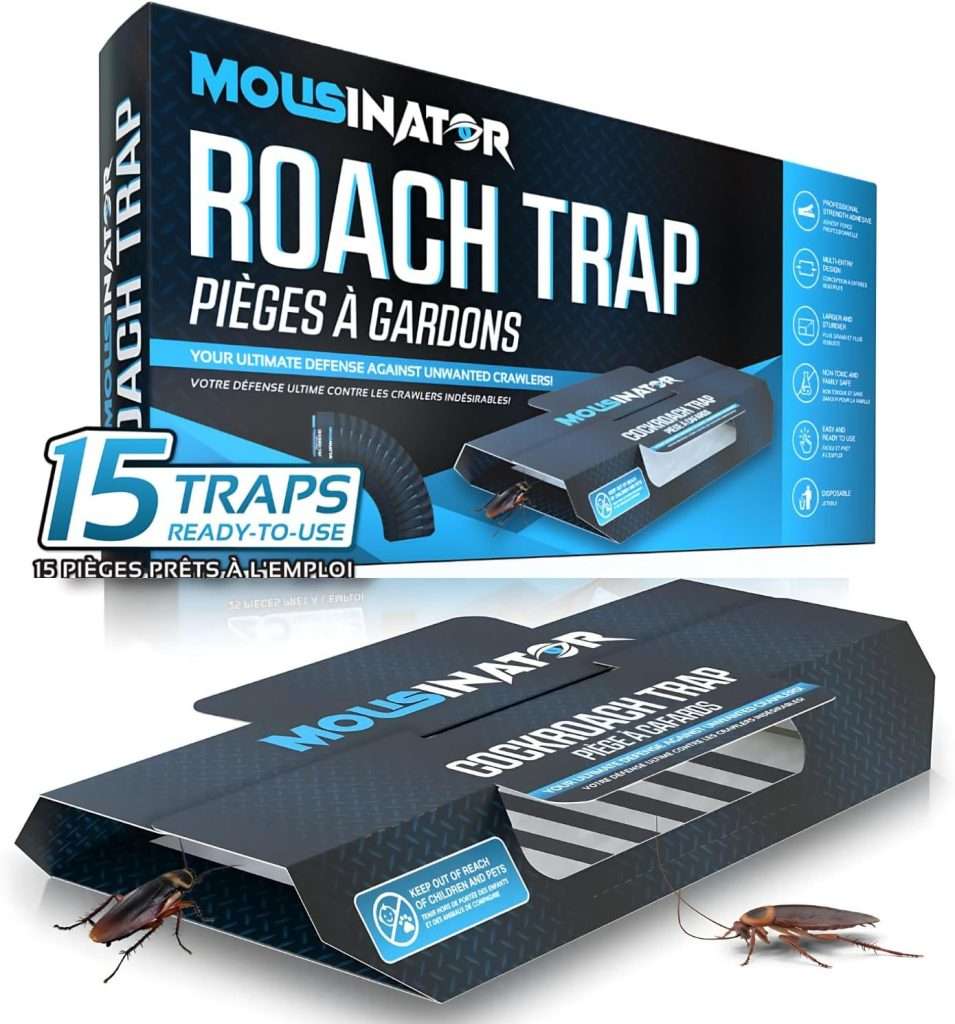
Where to Place Sticky Traps
Think dark, hidden, and close to food/water sources:
- Along baseboards and walls (roaches follow edges, not open spaces).
- Behind and under appliances (fridge, stove, dishwasher).
- Under sinks in kitchens and bathrooms (water source).
- Near garbage bins and pet food areas.
- In corners of cabinets or pantries where crumbs accumulate.
- Entry points like cracks near plumbing or baseboards.
Tips:
- Place multiple traps (5–10 in a kitchen alone is normal).
- Replace every 2–4 weeks or when full.
- Don’t put them in the middle of a room.
- Keep them away from areas kids or pets can get stuck to them.
Sealed Containers
Sealing up any loose food in a rubbermaid style container is a great way to keep roaches out and your food safe. Cockroaches will eat just about anything, so all food products and espeically those you have noticed roaches in should be safely stored.
Getting Rid of a Cockroach Problem
While you might be tempted to try handling this problem yourself, cockroach infestations are tricky to eliminate. Our pest control experts know exactly where to look and how to get rid of all the roaches – including the ones you can’t see.
We start by carefully checking your whole home to find where the roaches are hiding. Then we use safe but effective treatments to eliminate both adult and baby roaches. We’ll also help you fix the things that attracted them in the first place and show you how to keep them from coming back.

If your looking for a couple ways to deal with the situation on your own, check out our blog post
Our top 3 picks are:
- Cayenne, Garlic and Onion Powder
- Tea Tree Oil
- Borax and Sugar
Keeping Roaches Away for Good
After we’ve gotten rid of the roaches, here are some simple things you can do to keep them from coming back:
Keep your kitchen clean and store food in sealed containers. Even tiny crumbs can attract roaches back to your home. Fix any leaky pipes or faucets – roaches need water to survive. Get rid of cardboard boxes when you can, as roaches love to hide in them.
The National Health Institute has the following list of tips for preventing cockroaches
- Keep food and garbage in closed, tight-lidded containers.
- Do not leave food, dirty dishes, or pet food and bowls out on countertops or floors.
- Mop the kitchen floor and wash countertops at least once a week.
- Fix leaky faucets and drain pipes.
- Fill crevices around the house through which cockroaches may enter.
- Limit the spread of food around the house, especially in bedrooms.
- Use bait stations and other environmentally safe pesticides to prevent or reduce cockroach infestation.
Different Types of Baby Roaches
The two main types of cockroach babies you might see in your home look quite different:
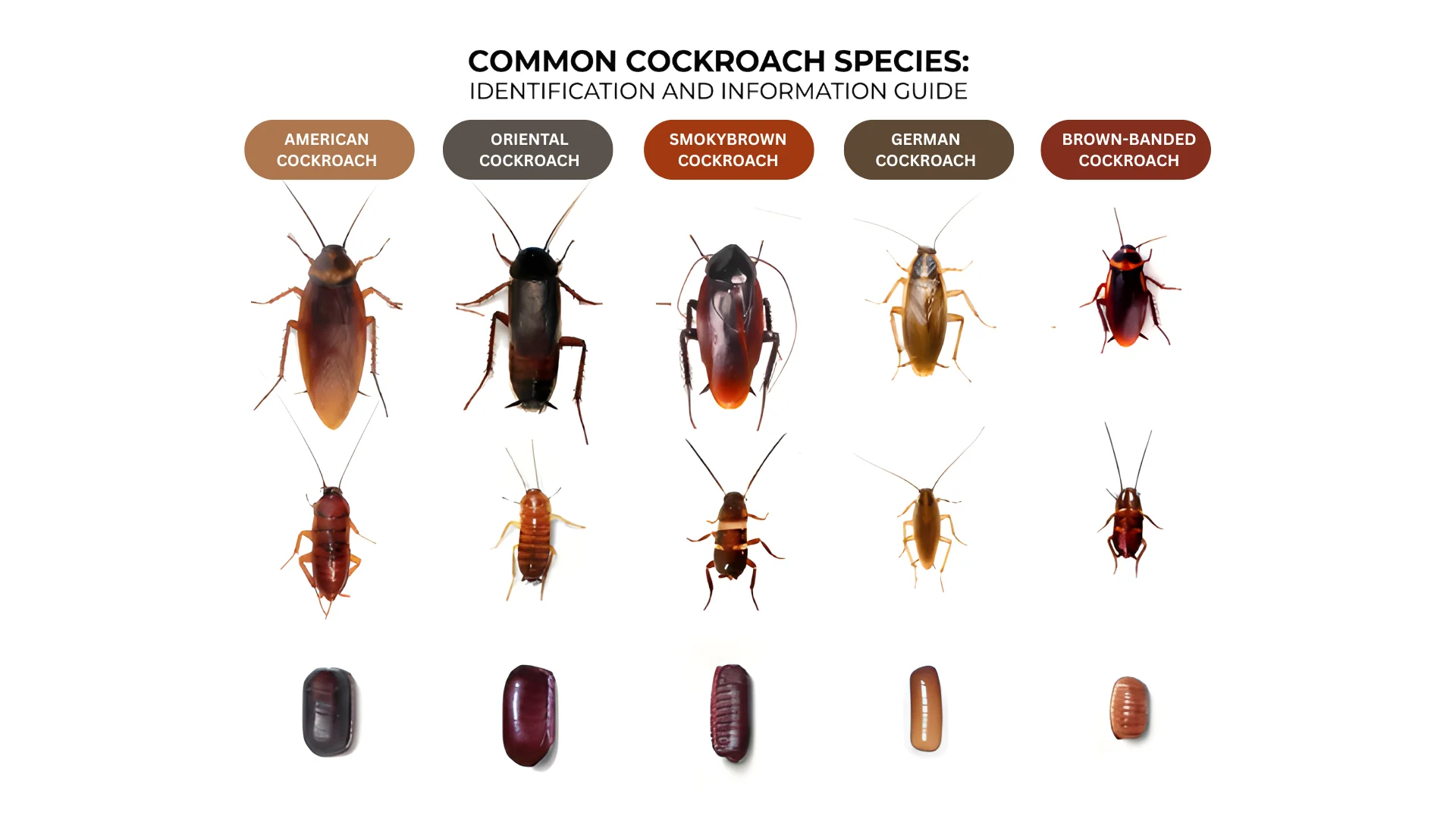
German Cockroach Babies
- Tiny size (about 1/8 inch)
- Light brown color
- Two dark stripes behind their head
- Grow to about 1/2 inch as adults
- Most common indoor species
American Cockroach Babies
- Larger size (about 1/4 inch)
- Reddish-brown color
- Pale “halo” marking behind their head
- Can grow up to 2 inches as adults
- Often found in basements and ground floors
When to Call The Bugman
If you’ve seen baby roaches in your home, don’t wait to get help. The problem will only get bigger the longer you wait. Small black droppings that look like coffee grounds, oval-shaped egg cases in corners or drawers, or seeing any roaches during the day are all signs you need professional help right away.
Ready to get rid of your roach problem? Contact The Bugman today. We’ve been helping homeowners in Mission, Abbotsford, Chilliwack, and nearby areas get rid of pest problems since 2006. Our team knows exactly how to handle cockroach infestations while keeping your family safe.

Remember, seeing baby roaches isn’t something to ignore – but it’s also not something you have to deal with alone. Let our experienced team help you make your home cockroach-free again.
Common Questions about Baby Cockroaches
Why am I seeing tiny baby roaches?
If you’re seeing tiny baby roaches, it usually means there’s an established cockroach infestation in your home. Adult cockroaches have found suitable conditions to breed, and their eggs have hatched. Baby roaches stay close to their nesting areas, so seeing them indicates there’s likely a nest nearby with more cockroaches. This often happens in homes that provide what roaches need: food, water, and shelter.
How do you identify a baby cockroach?
Baby cockroaches (nymphs) are smaller versions of adults, typically about 3-6mm long – similar to a grain of rice. They’re usually light brown or tan in color and don’t have wings like adult roaches. Baby roaches move quickly and tend to stay close to walls or dark spaces. Unlike adults, they have a more rounded appearance and may have different markings depending on the species.
Can you get rid of baby roaches?
Yes, you can get rid of baby roaches, but it requires a comprehensive approach. Professional pest control services are most effective because they target both adult and baby roaches, as well as eggs. The treatment should include identifying and sealing entry points, eliminating food and water sources, and using appropriate pest control methods. It’s important to treat the entire infestation, not just the visible baby roaches.
What are the small tiny roaches?
The small tiny roaches you’re seeing are most likely German cockroach nymphs, which are the most common household cockroach species. These baby roaches start very small (about 3mm) and grow larger as they mature. They can be distinguished from other insects by their flat, oval shape, long antennae, and quick movement. While German cockroach nymphs are most common, they could also be baby Oriental or American cockroaches, depending on your location.