Let’s be real, no one wants to walk into their kitchen at night and see a cockroach dart across the floor. These uninvited guests aren’t just gross; they can spread diseases and trigger allergies.
The good news is that identifying the type of cockroach you’re dealing with is the first step to kicking them out for good. Different species behave differently, so knowing what you’re up against helps you choose the best way to get rid of them. Whether you’re spotting tiny roaches in your pantry or large ones in your basement, this guide will help you identify the culprits and take action.
Why Knowing the Type of Cockroach Matters
Believe it or not, cockroaches are picky little pests. Certain species prefer specific environments: some thrive in warm, humid kitchens while others are more at home in cool, damp basements. If you mistake one type of roach for another, you could end up wasting time and money on the wrong pest-control strategies.
For example, fighting a German cockroach infestation isn’t the same as tackling the much larger American cockroach. (We’ll cover both below.)
By figuring out which species has made itself too comfortable in your home, you can:
- Track down their hiding spots and locate the source of the infestation.
- Choose the most effective method to eliminate them.
- Prevent future infestations by addressing the specific conditions that attract that type of roach.

For professional identification and treatment, contact The Bugman Pest Control, Call us today at 604-854-2847.
Types of Cockroaches
Now, let’s dive into the most common cockroach types you might find in your home and how to spot them:
1. German Cockroach (Blattella germanica)

- What They Look Like: Small roaches (roughly 1/2 inch long), light brown, with two dark stripes running down their backs.
- Where You’ll Find Them: Warm, moist areas like kitchens and bathrooms. Check under sinks, behind appliances, and near trash cans.
- Signs They’ve Moved In: Tiny black droppings (resembling ground pepper), egg cases (oothecae), and a musty smell.
- The Big Problem: German cockroaches breed fast. A small issue today can become a major infestation tomorrow.
- How to Fight Them: Use bait stations and gel baits near kitchens and bathrooms, since sprays rarely reach their hiding spots.
2. American Cockroach (Periplaneta americana)

- What They Look Like: Large (up to 2 inches long), reddish-brown, with a yellowish figure-eight pattern on their thorax.
- Where You’ll Find Them: Damp, dark places like basements, drains, and crawl spaces. In warm climates, they may appear throughout the home.
- Signs They’ve Moved In: Droppings that look like splinters, smear marks near water sources, and egg cases.
- The Big Problem: Also known as “water bugs,” they spread bacteria and contaminate food and surfaces.
- How to Fight Them: Reduce moisture, seal drains, and use residual insecticide sprays around entry points.
3. Brown-Banded Cockroach (Supella longipalpa)

- What They Look Like: About 1/2 inch long, light brown with two pale bands across their wings.
- Where You’ll Find Them: Prefer drier areas such as bedrooms, living rooms, inside electronics, furniture, or picture frames.
- Signs They’ve Moved In: Egg cases glued to walls or hidden surfaces; droppings near furniture or devices.
- The Big Problem: They damage books, wallpaper, and fabrics, and can also trigger allergies.
- How to Fight Them: Place bait traps in living spaces and reduce clutter, especially around furniture and electronics.
4. Oriental Cockroach (Blatta orientalis)
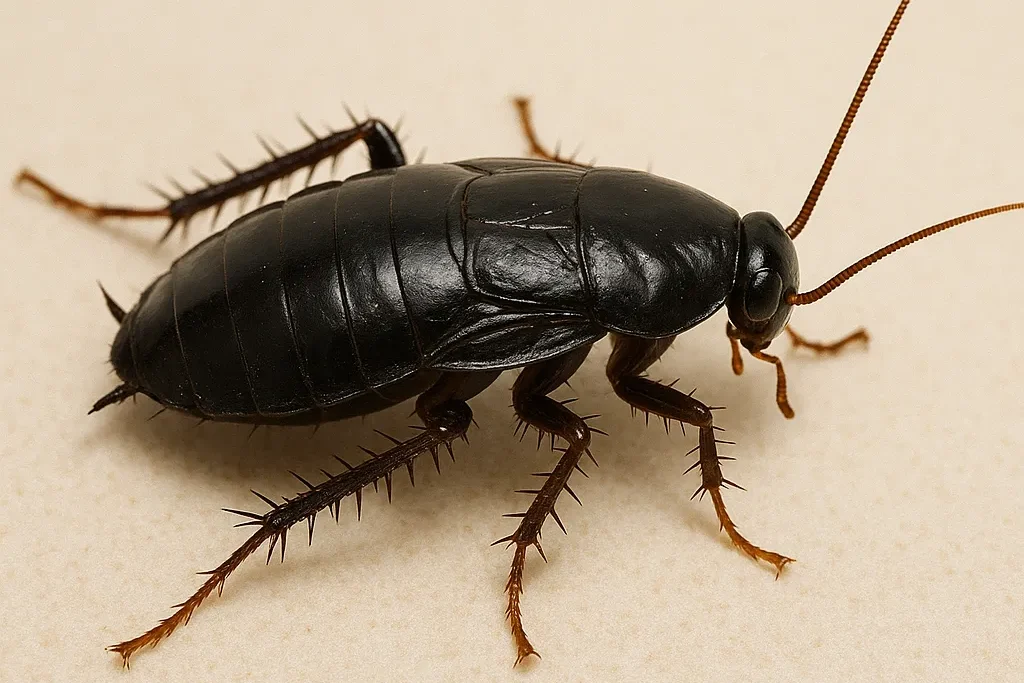
- What They Look Like: Medium-sized (1–1.25 inches), glossy dark brown or black. Females don’t have wings.
- Where You’ll Find Them: Cool, damp areas like basements, sewers, drains, and under sinks. Sometimes called “black beetles.”
- Signs They’ve Moved In: Strong foul odor, droppings similar to mouse poop, and slower movement compared to other species.
- The Big Problem: Thrive in filth and are notorious carriers of germs.
- How to Fight Them: Eliminate moisture sources and use residual sprays or powders around drains and basements.
5. Smoky Brown Cockroach

- What They Look Like: Large (up to 1.5 inches), uniformly dark brown, with wings covering their whole body.
- Where You’ll Find Them: Mostly outdoor pests, found in attics, woodpiles, sheds, and gutters. Indoors, they sneak in through cracks.
- Signs They’ve Moved In: Droppings, egg cases, and damage to cardboard or paper items.
- The Big Problem: Less common indoors but still capable of contaminating surfaces and food.
- How to Fight Them: Seal outdoor entry points and use perimeter treatments to keep them from sneaking inside.
How to Tell If You Have a Cockroach Problem
Cockroaches are masters of staying out of sight, which is why most people notice the clues before they ever see a live roach. Keep an eye out for these telltale signs:
- Droppings: Depending on the species, these can look like tiny black specks or small oval pellets.
- Egg Cases: Roaches hide their oothecae in cracks, corners, or even glued to surfaces.
- Foul Odor: A musty, unpleasant smell usually means a large infestation is close by.
- Shed Skins: As they grow, cockroaches shed their outer shells and leave them behind.
- Daytime Sightings: Roaches are nocturnal, so seeing them in daylight often points to severe overcrowding.
If you notice even a couple of these warning signs, don’t wait. Small problems quickly turn into major infestations.
How to Prevent and Eliminate Roaches
DIY Prevention Tips
- Seal Cracks and Gaps: Use caulk to close off entry points in walls, floors, and windows.
- Clean Thoroughly: Wipe up spills, store food in airtight containers, and take out the trash regularly.
- Fix Leaks: Repair any plumbing issues to get rid of water sources.
- Declutter: Eliminate potential hiding spots like piles of paper, cardboard boxes, and old junk.

When to Call the Pros
If your DIY efforts aren’t cutting it, don’t hesitate to call professional pest control services. Experts can:
- Accurately identify the cockroach species and level of infestation.
- Use advanced treatments like bait traps, residual sprays, or insect growth regulators.
- Offer helpful tips to keep your home roach-free in the future.
For expert assistance, contact The Bugman Pest Control at 604-854-2847.
FAQs
How do I identify the type of cockroach in my house?
Look at its size, color, and markings, and note where you’ve found it. Each species has specific preferences and characteristics (refer to the guide above).
Are cockroaches dangerous?
Absolutely. They can contaminate food, spread bacteria like Salmonella, and even trigger allergies or asthma.
Can I get rid of cockroaches on my own?
Small infestations can sometimes be handled with DIY methods like bait traps and sealing entry points. Bigger problems may require a professional. If you’re overwhelmed, consider reaching out to professional pest control services for reliable and thorough pest management services.
What attracts cockroaches?
Cockroaches are drawn to the essentials: easy access to food scraps, leaky pipes or other water sources, and plenty of dark, cluttered spaces to hide. If your home provides these three things, roaches will see it as the perfect place to settle in.
Final Thoughts
Cockroaches multiply quickly, and what starts as a few pests can turn into a serious infestation before you know it. Don’t wait until it’s out of control — let the professionals step in.
At The Bugman Pest Control, we’ll identify the exact species, eliminate the infestation, and help prevent future problems so your home stays pest-free. Call us today at 604-854-2847 for fast, reliable service and take back your home from unwanted intruders.
Sources
- https://idph.illinois.gov/envhealth/pcsaferoach.htm – Illinois Department of Public Health overview of cockroach risks, health concerns, and safety tips.
- https://www.maine.gov/dacf/php/gotpests/bugs/factsheets/cockroaches-cornell.pdf – Cornell fact sheet on cockroach identification and species characteristics.
- https://www.health.ny.gov/publications/3202/ – New York State Department of Health guide to cockroach risks and control methods.
- https://www.ottawapublichealth.ca/en/public-health-topics/cockroaches.aspx – Ottawa Public Health resource on prevention, treatment, and housing responsibilities.
- https://www.canada.ca/en/health-canada/services/pest-control-tips/cockroaches.html – Health Canada tips on safe and effective cockroach control strategies.