Table of Contents
Related Blogs


Wasps vs Bees: How to Tell Them Apart
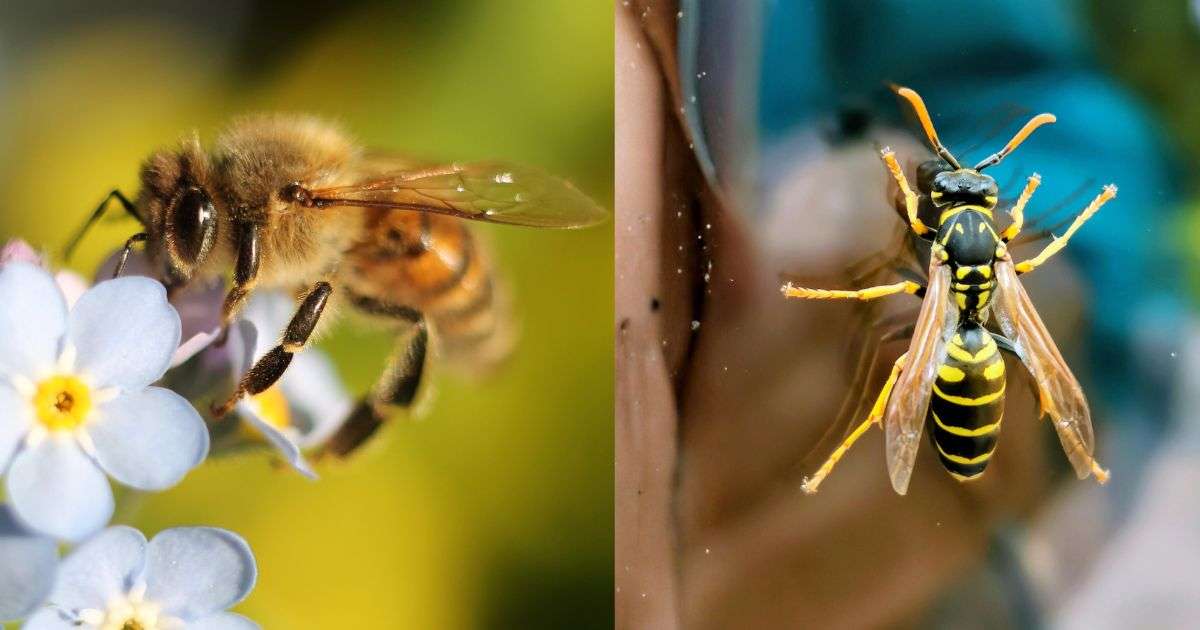
Learn the key differences between wasps and bees in the Fraser Valley, and what to do if you find a nest near your home or garden
If you’ve ever shooed away a yellow‑and‑black insect on your Fraser Valley patio, you’ve probably wondered: Is that a bee or a wasp?
Getting them right matters. Bees are pollinators that are protected and often relocated, while wasps and hornets are pests that can be safely removed or treated. Misidentifying them can mean accidentally killing something valuable, or putting yourself at risk around something aggressive.
This guide will help you tell them apart by body, colour, behaviour, and nest, and show you what to do in the Fraser Valley.
Quick Snapshot: Bee vs Wasp vs Hornet
| Feature | Bee | Wasp | Hornet |
|---|---|---|---|
| Body shape | Round, plump, fuzzy | Slender, smooth, narrow waist | Larger wasp, thicker body |
| Colour | Yellow-brown, often dull | Bright yellow-black stripes | Yellow-black or orange-black |
| Legs | Short, often tucked in | Long, dangling in flight | Long, noticeable in flight |
| Stings | Once (usually fatal for bee) | Multiple | Multiple, more powerful |
| Nest material | Wax (honeycomb) | Papery, chewed wood fibre | Very large papery nests |
| General role | Pollinators, “honey-makers” | Scavengers, predators | Aggressive scavengers |
Telling Bees from Wasps by Appearance
Bees:
Bees are built for pollination, so they’re round, fuzzy, and “beefy” compared to wasps:
- Honey bees tend to be duller in colour, with a mix of brown and yellow bands.
- Bumble bees are big, fuzzy, and loud‑buzzing, often with black and bright yellow bands.
- Most bees carry pollen on their legs or body, which looks like tiny dust or “tufts” on their limbs.
If the insect looks like a soft, fuzzy, round little bug drifting from flower to flower and flying with its legs pulled in, it’s very likely a bee.

Wasps
Wasps are sleeker, smoother, and meaner‑looking:
- Yellow jackets and paper wasps have a distinct “waist” where the abdomen pinches in sharply.
- Their bodies are shiny, smooth, and less hairy, with bright, high‑contrast yellow‑black or yellow‑black‑orange patterns.
If the insect looks like a skinny, glossy, speedy flyer with long legs dangling in the air, you’re almost certainly dealing with a wasp.
Hornets (and Bald‑Faced Hornets)
Hornets are technically a type of wasp, but they’re bigger and more aggressive:
- Baldfaced hornets, common in the Fraser Valley, have a thick, white‑marked head and black body and build large, basketball‑sized aerial nests.
These are the insects you see forming big grey‑brown paper nests in trees, on eaves, or under decks.
How Do They Behave Differently?
Bees
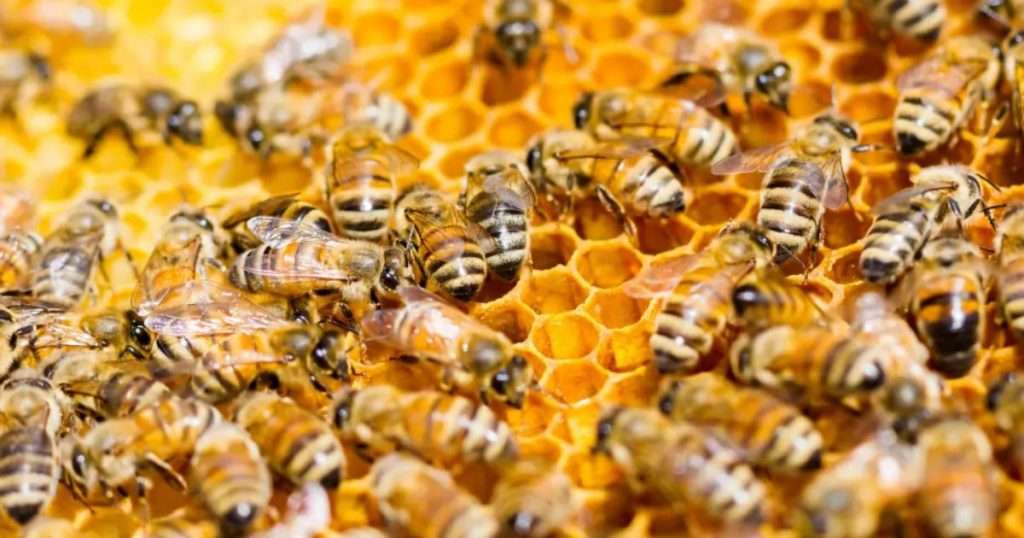
- Bees generally only sting as a last resort, especially when they feel their hive is threatened or when they’re stepped on or trapped against skin.
- Honey bees die after they sting because their barbed stinger lodges in the skin and tears away from the bee’s body.
- A single bee sting usually causes a sharp pain, swelling, and redness, and people with allergies can have more serious reactions.
When and how bees sting
Wasps & Hornets
- Wasps chase sweets, meats, and garbage; they’re the ones landing on your BBQ, drinks, and compost.
- They’re territorial and defensive. If you get too close to their nest, they can swarm and sting repeatedly.
- Hornets, especially baldfaced hornets, can be highly aggressive around their large nests.
When and how wasps and hornets sting
- Wasps and hornets sting when they feel their nest is threatened, when you get too close to the nest, or when you hit, swat, or corner them.
- They can sting multiple times because their smooth stingers do not stay behind, making them more dangerous in close‑quarters encounters.
- Yellow jackets are especially known for chasing people near food, garbage, or patios if they feel you are a threat.
- Baldfaced hornets can be highly aggressive and may swarm if you disturb their large, high‑up nests.
Do wasps “remember” or target you?
- Research and pest‑control studies suggest that some wasps can learn patterns and respond to repeated threats, but they’re not “holding a grudge” like a person would.
- Instead, they may associate your scent, movement, or sound with a past disturbance (like swatting or knocking the nest) and respond more aggressively when you come near again.
- This is why pest control professionals always recommend keeping your distance, avoiding sudden movements, and not disturbing nests, it reduces the chance of triggering repeated attacks.
Colony and Nest‑Building Habits
Bees
In early spring, a single queen honey bee takes over a mature hive, and her entire job is to lay eggs while the rest of the colony does the work.
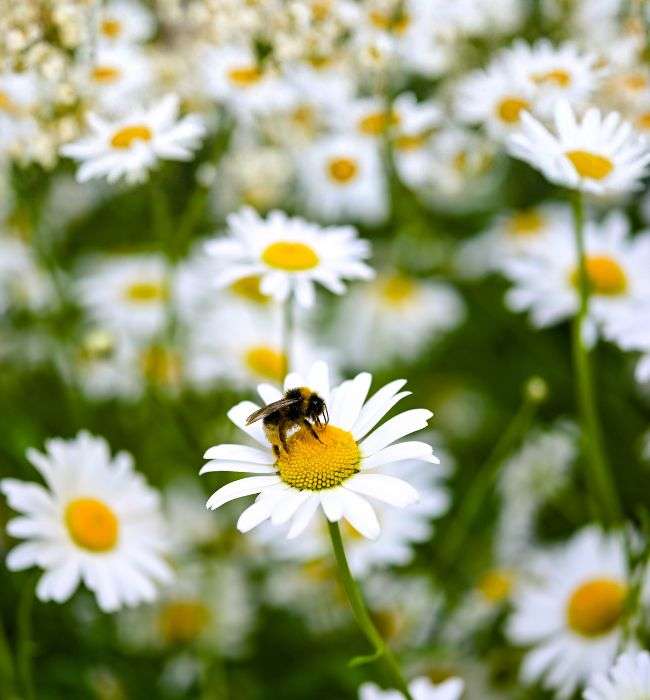
- Eggs to larvae: The queen lays fertilized eggs in wax cells in the heart of the hive. Nurse bees care for the tiny white larvae, feeding them royal jelly or pollen mix depending on what the colony needs.
- Larvae to pupae: After a few days, each larva is capped over with wax. Inside the sealed cell, the larva becomes a pupa and finishes developing into a fully formed worker bee.
- Workers take over: Newly emerged worker bees start inside the hive as cleaners, then become nurse bees, later shift to hive maintenance, and eventually become foragers that visit flowers and bring back nectar, pollen, and water.
- Seasonal build‑up and decline: From spring to early summer, the colony grows fast, strong hives in temperate areas like the Fraser Valley can reach tens of thousands of bees. In late summer, swarming may occur: an old queen leaves with a large group of workers to form a new colony elsewhere, while a new queen takes over the original hive. In the fall, the population declines; the bees form a winter cluster around the queen, where they shiver and feed on stored honey until spring returns.
Queen, drone, and worker roles
- Queen – Only one per hive; she lays eggs and keeps the colony intact through pheromones.
- Workers – All female, non‑reproducing; they run every aspect of the hive and typically live a few weeks to several months.
- Drones – Males; their only job is to mate with a queen. They’re present in spring and summer but are often driven out or killed in the fall.
Wasp & Hornets
In early spring, a single fertilized queen wasp or hornet emerges from hibernation, often choosing a sheltered spot under eaves, in soffits, or near the ground to start a new colony.
- Eggs and the first workers: The queen builds a small starter nest of chewed wood fibers and lays eggs in the cells. Those eggs hatch into larvae, which she feeds with insects and protein‑rich material.
- From larvae to adults: After a few days, the larvae enter a pupal stage, then emerge as adult worker wasps. These workers gradually take over nest‑expansion, foraging, and feeding the next generation of larvae, while the queen focuses on laying more eggs.
- Mid‑ to late‑summer expansion: From spring to mid‑summer, the colony grows fast; a well‑established nest can eventually contain hundreds to thousands of wasps or hornets. The nest enlarges in layers, often becoming a papery, grey‑brown ball or comb visible on eaves, in trees, or under decks.
- Late‑season shift and decline: In late summer, the queen begins producing new queens and male drones instead of just workers. As temperatures drop into fall, the original queen and most workers die off, leaving only the new queens to hibernate and start the cycle again the following spring. Once a wasp or hornet nest is abandoned in the fall, the colony never returns to it.
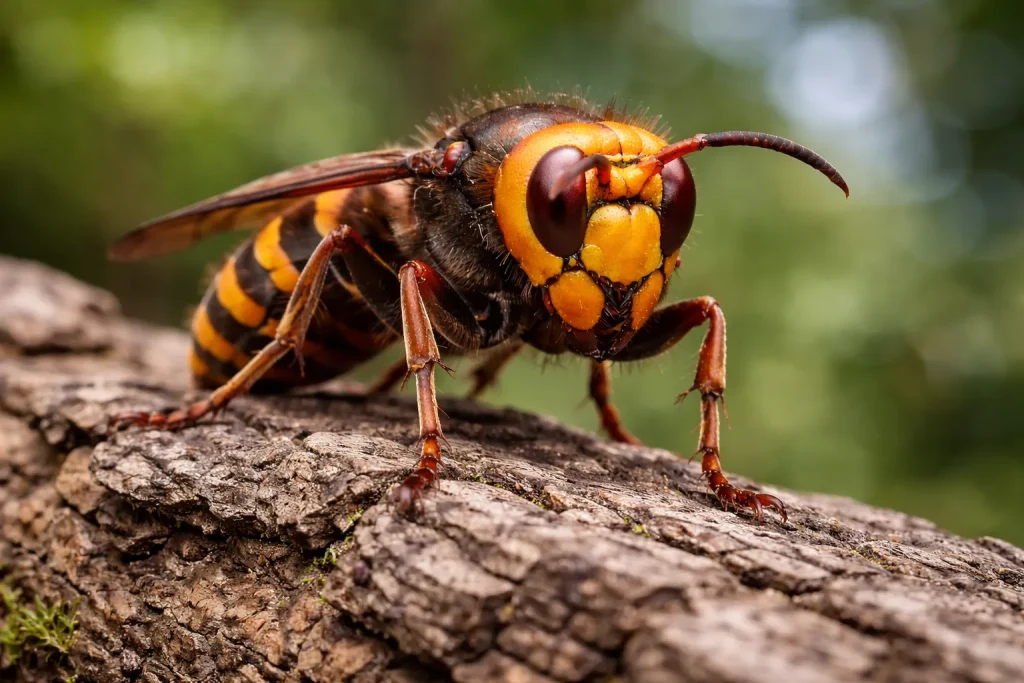
Queen, worker, and drone roles
- Queen – The only egg‑layer in the colony, responsible for founding the nest and leading the first waves of eggs.
- Workers – All female, non‑reproducing; they build, defend, and forage, typically living only a few weeks to a few months.
- Drones – Males; their only role is to mate with new queens and they are produced in the late‑season phase.
Hive/Nest Appearance
Bees
- Honey bee hive (inside attic, wall, or hollow tree): Often produces a steady humming sound.<br> You may see bees entering and leaving a small hole or crack. If opened, you’ll see wax honeycomb and honey.
- A honey‑bee swarm on a branch or fence is usually a cluster of bees hanging together, calm until disturbed.
Wasps & Hornets
- Paper‑wasp nest: A small, open‑bottomed papery comb under eaves, in soffits, or on railings.
- Yellow‑jacket nest: Often in the ground, in wall voids, or under decks; looks like a large, hidden papery structure.
- hidden papery structure. Hornet nest: A big, teardrop‑shaped, fully enclosed paper ball, often high up in a tree or on a structure.

What You Should Do (Fraser Valley Edition)
If it’s a bee:
- Do not spray or smash it.
- If you see a swarm or a hive near a high‑traffic area (door, patio, kids’ play zone), call a bee‑relocation service
If it’s a wasp or hornet:
- Keep your distance from the nest, especially with yellow jackets and baldfaced hornets.
- If the nest is near your home, deck, or kids’ play area, arrange for professional wasp or hornet removal.
- The Bugman provides wasp extermination and baldfaced‑hornet‑specific treatments across the Fraser Valley, using targeted, low‑impact methods where possible.
What The Bugman Can Do for Your Fraser Valley Home
Understanding the difference between bees and wasps is only half the battle. The other half is knowing what The Bugman can do safely, legally, and humanely in the Fraser Valley.
For Bees
Honey bees are protected pollinators, and in many areas, including parts of British Columbia, pesticide use against established honey‑bee colonies is restricted or effectively prohibited. This means we cannot treat honey‑bee hives with standard insecticides.
- The Bugman does not offer honey‑bee relocation services ourselves, but we can connect you with local bee‑relocation companies and beekeeping groups that specialize in safe, non‑lethal removal and transport.
- If you have a swarm or hive near your home and are unsure who to call, a quick consultation with The Bugman can help you identify the issue and point you to the right bee‑friendly contacts.
This approach keeps native pollinators alive while giving you peace of mind that your property is protected.
For Wasps and Hornets
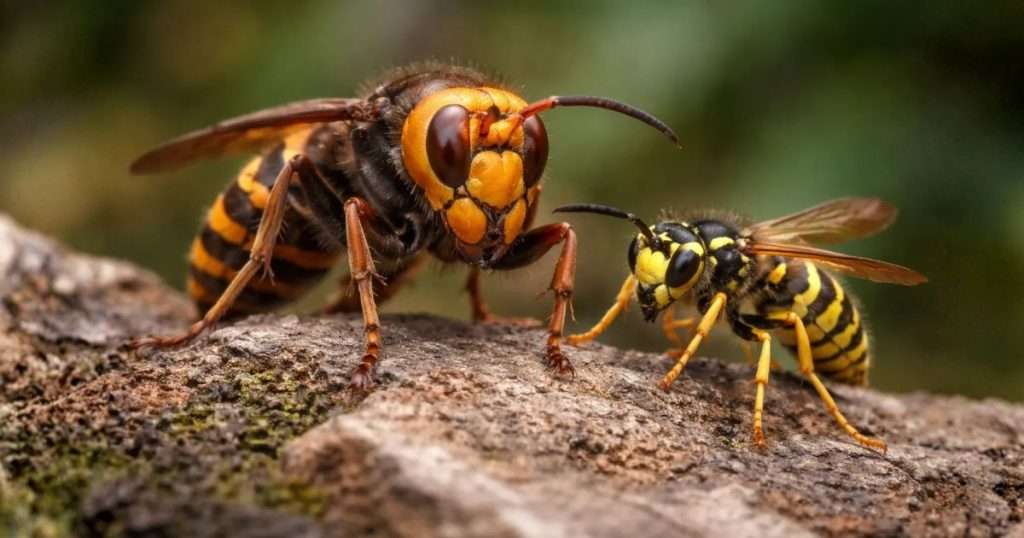
In the Fraser Valley, wasps and hornets can be treated and removed, and handling them early in the season is the safest way to protect your family and pets.
The Bugman offers:
- Professional nest treatment and removal for yellow jackets, paper wasps, and bald‑faced hornets, including nests near houses, under decks, eaves, or in trees.
- Targeted perimeter treatments around your home and yard to reduce the chances of future nests forming in high‑traffic areas.
- Wasp‑bag placement (non‑lethal or monitoring traps) in certain locations, which can help reduce the number of queen wasps establishing new nests on your property later in the season.
If you’re dealing with a wasp or hornet nest that’s near doors, windows, kids’ play areas, or regularly used patios, The Bugman can inspect the site and arrange safe removal so you can enjoy your outdoor space without worrying about aggressive stings.
FAQs
How do you tell if it’s a wasp or bee?
Bees are usually round, fuzzy, and “beefy,” while wasps are sleeker, smoother, and have a narrow “waist.” Bees are often duller in colour and gently moving from flower to flower; wasps look shiny, quick, and may land on food, garbage, or drinks.
How do I tell if I have wasps or bees?
Look at the insects and their nest. Bees tend to cluster on flowers and produce wax‑cell honeycombs, while wasps are drawn to food and garbage and build papery, grey‑brown nests in eaves, decks, or the ground.
Does Dawn dish soap get rid of bees?
A Dawn‑based soapy spray can kill bees and other insects, but it’s not a reliable pest‑control method and should not be used on protected or valuable pollinators like honey‑bee hives.
Which hurts worse, a bee or wasp sting?
Both hurt, but wasp stings are often described as sharper and more piercing, while bee stings feel more like a sudden burning sensation. The exact pain depends on where you’re stung and how many times you’re stung.
What bug has the most painful sting?
The bullet ant and some large tropical wasps are considered among the most painful, but in everyday backyard settings, velvet ants, harvester ants, and some parasitic wasps can feel extremely painful as well.
What is the pain of a wasp sting equivalent to?
Wasp sting pain is often described as similar to a sharp needle or electric jab, more intense and focused than many other insect bites, and often followed by a throbbing ache.
What is the most painful place to get stung?
Areas with thin or sensitive skin, like face, lips, eyelids or the mouth tend to hurt the most when stung, because there’s less tissue to buffer the venom and swelling.
Which is more aggressive to humans, a bee or a wasp?
Generally, wasps and hornets are more aggressive. They more often sting repeatedly if you’re near their nest or food source, whereas bees usually only sting if they feel threatened or trapped.
What does WD‑40 do to wasps?
WD‑40 can coat and smother some insects, but it’s not a labelled insecticide and can be flammable or create fumes near structures, so it’s not recommended around wasp nests.
What happens if you spray a wasp with WD‑40?
Spraying WD‑40 directly on a wasp may immobilize or kill it, but it can also irritate the nest and provoke more stings, and the product isn’t designed for pest control.
How long does WD‑40 take to kill wasps?
There’s no safe, consistent time frame; depending on volume and coverage, it might work quickly or barely work at all, and using it near a nest increases your risk of being stung.
What do wasps absolutely hate?
Wasps dislike strong smells like peppermint, eucalyptus, and tea tree oil, as well as soapy or citrus sprays, though these are only deterrents, not long‑term solutions for nests.
What is the 3 3 3 rule for bees?
In some beekeeping circles, the “3‑3‑3 rule” is an informal way to describe spacing: leave about 3 feet between hive entrances, 3 yards between rows, and 3 yards between hives and property lines, to reduce drifting and property disputes, but this is not a universal regulation.
What smell do bees hate the most?
Bees are deterred by strong, sharp scents such as peppermint, citronella, and some essential oils, but these are not guaranteed repellents and should never be used instead of proper hive management.
What is the 7 10 rule for beehives?
Some bee‑friendly guidelines suggest checking hives about once a week during active season (roughly every 7 days) and 10 times over a season as a minimum to catch disease or queen problems early, but this is a general rule of thumb, not a law.
How long can a bee remember you?
Individual bees have very short memories, usually only minutes to hours, and they don’t hold personal grudges. Any “recognition” is more about repeated threats to their hive than long‑term memory.
What is a bee’s worst enemy?
A bee’s worst enemies include parasitic mites, pesticides, habitat loss, and severe weather, as well as some invasive wasp and hornet species that attack hives.